


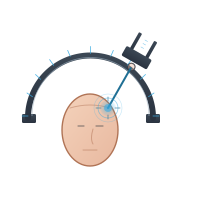
Surgery for dystonia.
Dystonia: generalized, focal (cervical, blepharospasm), and severe acute episodes (status dystonicus).
Who we see
If your hands shake, your body stiffens, you have unwanted movements, or your medications have stopped working, surgery is sometimes an option. We don’t offer surgery as a first step — we work with the neurologists at the Penn Movement Disorders Center to make sure it’s the right next step for you. The right operation depends on the condition, the symptoms that bother you most, and what you can tolerate.
Procedures we offer
- Deep brain stimulation (DBS) — a thin wire is placed in a specific brain area and connected to a small pacemaker-like device under the skin. The settings can be adjusted in clinic over time. The brain target depends on what you have:
- For dystonia: GPi or STN — full FDA approval (Medtronic) for chronic, intractable primary dystonia, including generalized, segmental, and cervical dystonia in adults, and primary generalized dystonia in patients age 12 and older
- Laser interstitial thermal therapy (LITT) — minimally invasive MRI-guided ablation through a small skull opening. Used in select cases where a focal lesion is preferred over a stimulator (for example, status dystonicus or when DBS hardware can’t be tolerated). Less commonly used for movement disorders than for epilepsy.
Risk and complication profiles for each of these procedures are part of the in-person discussion in clinic. They depend on your individual anatomy, medical history, and goals, and we walk through them with you before any procedure is recommended.
Before any procedure
- Movement disorders: updated brain MRI, neuropsychology testing, and (for Parkinson's) sometimes a levodopa challenge, which measures how much of your symptom improves with your usual Parkinson's medication. Your case is then discussed at a multidisciplinary movement disorders conference, and we work through which procedure (DBS, MRgFUS, Gamma Knife, or LITT) fits your goals.
Where you’ll be seen
Most patients are first seen at Pennsylvania Hospital in Center City Philadelphia. A second clinic in Lancaster is available for patients in central Pennsylvania.
Penn Neurosurgery — Pennsylvania Hospital
801 Spruce Street
Philadelphia, PA 19107
Phone: 215-829-6700
Get directions on Google Maps →LG Health Physicians Neurology — Harrisburg Pike
2150 Harrisburg Pike
Lancaster, PA 17601
Phone: 717-396-9167
Get directions on Google Maps →Appointments and second opinions
Most patients arrive with a referral from a neurologist, primary-care physician, or epileptologist. A referral is not strictly required, but it lets your doctor send your imaging, notes, and medication list ahead of the visit, which makes the consultation more useful. To request an appointment, call 800-789-7366.