


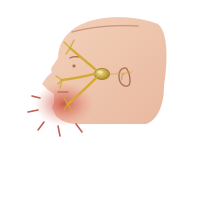
Surgery for trigeminal neuralgia.
Trigeminal neuralgia: severe, sudden, electric-shock-like facial pain.
Procedures we offer
- Microvascular decompression (MVD) — surgery to take pressure off the trigeminal nerve from a nearby blood vessel. Often the most durable option for classical trigeminal neuralgia.
- Percutaneous procedures for trigeminal neuralgia — short outpatient procedures done through a needle in the cheek under brief anesthesia (glycerol rhizotomy, balloon compression, radiofrequency rhizotomy). They interrupt the trigeminal nerve's pain fibers. Less invasive than MVD but typically shorter-lasting.
- Gamma Knife radiosurgery — focused radiation directed at the trigeminal nerve. No incision; pain relief usually develops over weeks to months.
- Trigeminal nerve field stimulation — leads placed under the skin of the face along the painful trigeminal branches, for refractory trigeminal pain when surgery and medications haven't been enough. Reversible — no nerve tissue is destroyed.
Risk and complication profiles for each of these procedures are part of the in-person discussion in clinic. They depend on your individual anatomy, medical history, and goals, and we walk through them with you before any procedure is recommended.
Before any procedure
- Pain or facial nerve pain: imaging review (often a high-resolution MRI of the trigeminal nerve for facial pain), medication review, and assessment of prior treatments. For spinal cord stimulation or DRG candidates, a percutaneous trial period is typical before any permanent implant.
Where you’ll be seen
Most patients are first seen at Pennsylvania Hospital in Center City Philadelphia. A second clinic in Lancaster is available for patients in central Pennsylvania.
Penn Neurosurgery — Pennsylvania Hospital
801 Spruce Street
Philadelphia, PA 19107
Phone: 215-829-6700
Get directions on Google Maps →LG Health Physicians Neurology — Harrisburg Pike
2150 Harrisburg Pike
Lancaster, PA 17601
Phone: 717-396-9167
Get directions on Google Maps →Appointments and second opinions
Most patients arrive with a referral from a neurologist, primary-care physician, or epileptologist. A referral is not strictly required, but it lets your doctor send your imaging, notes, and medication list ahead of the visit, which makes the consultation more useful. To request an appointment, call 800-789-7366.